


7 Easy, Low-Maintenance Aquatic Plants for Beginners
Live plants are one of the best upgrades you can make to any aquarium. Beyond giving your tank a lush, natural look, aquatic plants act as natural biofilters. They absorb harmful nitrates, boost oxygen levels, and compete directly with algae for nutrients—leading to cleaner water, healthier fish, and fewer water changes.
If you are new to planted tanks, you don't need a green thumb or expensive equipment to get started. Here are seven hardy, low-maintenance aquatic plants that thrive with minimal care.
1. Java Fern
A staple in the aquarium hobby, Java Fern is incredibly resilient and thrives in low-light environments.
Planting: Do not bury the rhizome (the thick horizontal stem) in the substrate, as it will rot. Instead, attach it directly to rocks or driftwood using thread or aquarium-safe glue.
Growth: Slow-growing; reaches up to 13 inches tall.
Best For: Beginners looking for an indestructible, hardscape-attached plant.
2. Anubias
Like Java Fern, Anubias species are practically bulletproof and tolerate a wide range of water parameters.
Planting: Keep the rhizome exposed by securing the plant to wood or stone.
Growth: Slow and steady; can reach up to 16 inches depending on the specific variety.
Best For: Tanks with plant-nibbling fish, thanks to its thick, leathery leaves.
3. Cryptocoryne (Crypts)
If you want plants that root directly into your substrate, Crypts offer fantastic diversity in leaf shape, texture, and color while requiring only low-to-moderate light.
Planting: Insert the roots straight into the substrate.
Growth: Adaptable and sturdy; grows up to 12 inches tall.
Best For: Midground and foreground coverage with minimal fuss.
4. Marimo Moss Ball
While technically a spherical form of beneficial algae rather than a true plant, the Marimo Moss Ball functions wonderfully in freshwater setups.
Planting: None required—simply drop it into the tank.
Growth: Extremely slow-growing; can live for over 100 years.
Best For: Adding a unique, soft visual element while helping pull nitrates out of the water column.
5. Java Moss
Java Moss is one of the most versatile options for adding dense, natural greenery to your aquascape.
Planting: Can be glued to rocks and wood, or left to float freely.
Growth: Moderate; grows around 1 to 1.5 inches per month in low light.
Best For: Providing cover and security for small fish, fry, and shrimp.
6. Amazon Sword
For larger aquariums needing a bold centerpiece, the Amazon Sword provides dramatic height and vibrant broad leaves.
Planting: Root directly into a deep substrate layer.
Growth: Fast-growing; can reach up to 20 inches tall.
Best For: Creating a lush backdrop in medium-to-large tanks.
7. Hornwort
Hornwort is a fast-growing, feathery plant that acts as a natural nutrient sponge, making short work of excess nitrates and suppressing algae.
Planting: Can float freely at the surface or be anchored into substrate.
Growth: Rapid growth; reaches up to 24 inches.
Note: Hornwort sheds its needle-like leaves if conditions fluctuate, so keep a cleanup crew or siphon handy.
Key Maintenance Tips for Beginner Planted Tanks
Even low-maintenance species benefit from a basic care foundation:
Match Your Lighting: Low-light plants like Anubias and Java Fern can burn or collect algae under high-intensity lights. Standard or adjustable LED fixtures work best.
Maintain Water Consistency: While plants reduce overall waste, routine liquid water testing and scheduled water changes remain essential for long-term stability.
Provide Nutrients: Heavy root-feeders (like Amazon Swords and Crypts) benefit from root tabs, while water-column feeders (like Java Moss and Hornwort) prefer a quality liquid fertilizer.

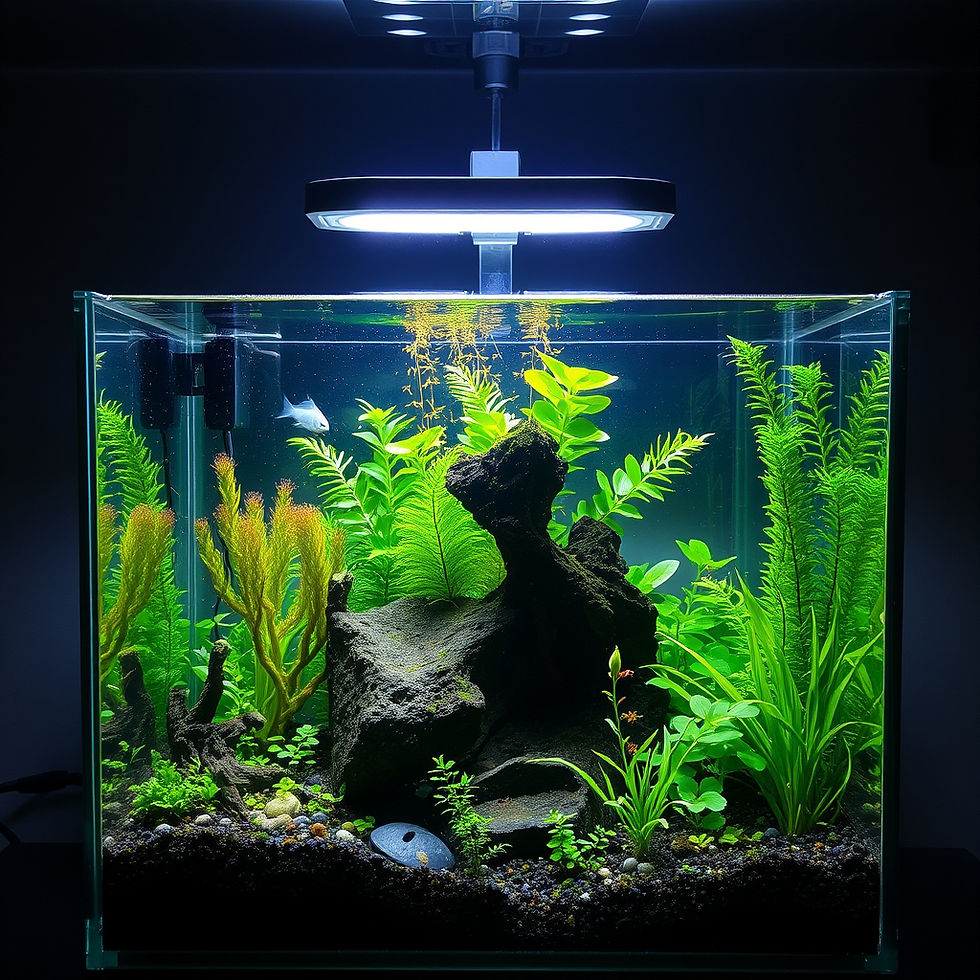

My male croaking gourami will be bred my harlequin rasboras will even breed the single male republican🚩 peacock gudeon Mr Gregor wont. As ive said I don't get southeast asian/malaysian tanks for republican fish to breed only for my faaarleft fish to breed.😊